
I’ve Gone Down the Red Light Therapy Rabbit Hole…
If you’ve spoken to me recently, you’ll know I’ve become a little obsessed with Red Light Therapy, Near Infrared (NIR) and Photobiomodulation!
As a podiatrist, I’m always looking for evidence-based technologies that genuinely help my patients heal. After months of researching, comparing devices and diving deep into the science (yes… I went down the rabbit hole!), I realised how confusing it can be to know what’s worth investing in.
So, I’ve pulled together a simple guide to explain how red light therapy may help conditions like plantar fasciitis, Achilles pain, muscle recovery, nail trauma and even support healthier nail growth—and what to look for if you’re considering a home device.
At Luxe Feet, we already combine Medical Laser Therapy with Low Level Laser Therapy (Photobiomodulation) to treat a wide range of musculoskeletal conditions and fungal nail infections, so this is a topic I’m genuinely passionate about.
If you’ve been curious about red light therapy but didn’t know where to start, I hope this helps make sense of it all.
What exactly is Photobiomodulation?
Think of it as giving your cells more energy.
Photobiomodulation uses specific wavelengths of red and near-infrared (NIR) light to stimulate the mitochondria—the “powerhouse” inside every cell.
This encourages increased ATP (cellular energy) production, helping tissues repair themselves more efficiently while reducing inflammation and
supporting circulation.
Unlike heat therapy, the goal isn’t to warm the tissues.
The light itself penetrates the skin, where it interacts with cells, encouraging the body’s own healing processes.
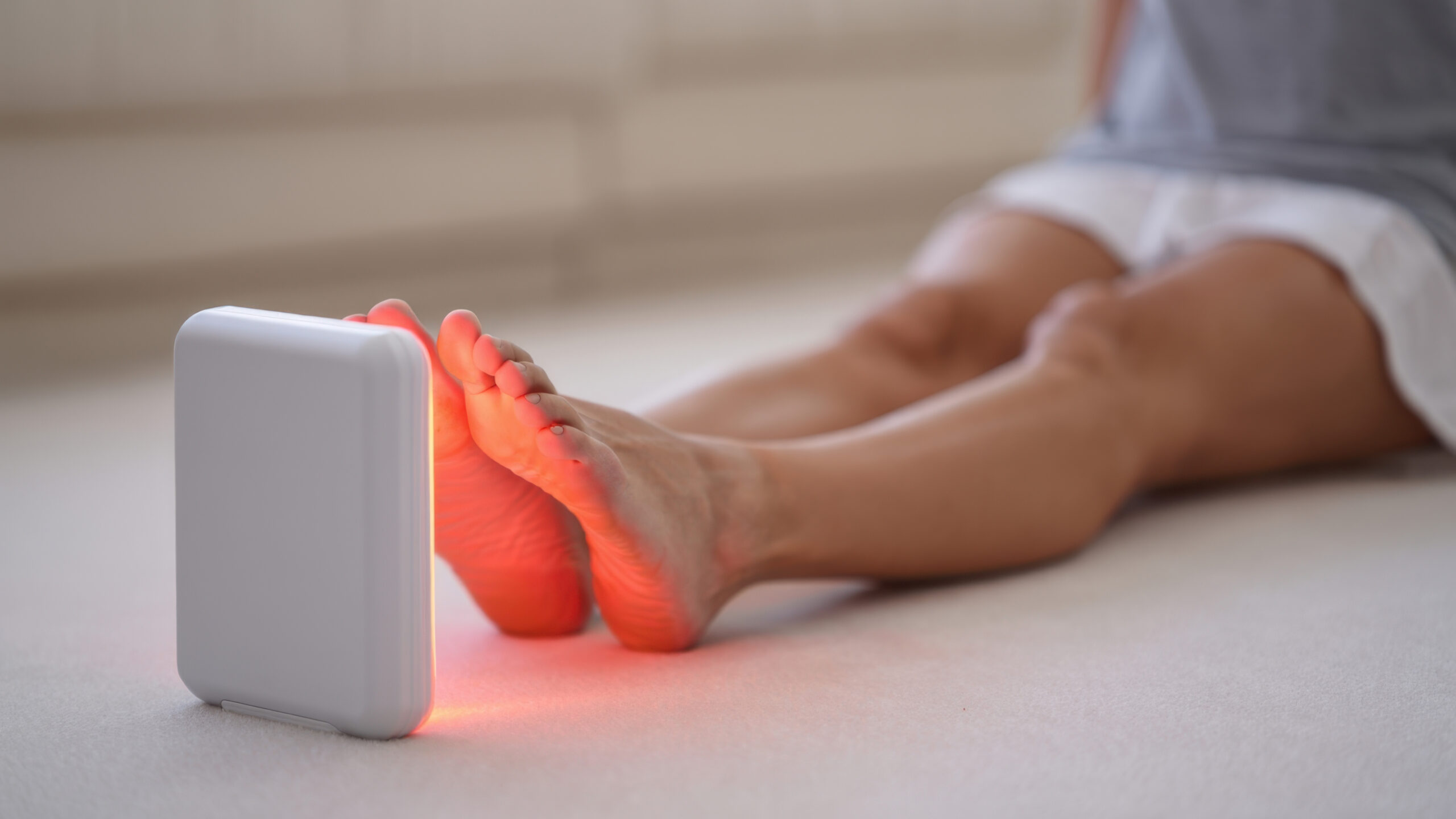
Red Light vs Near Infrared
Many consumers don’t realise these are actually different technologies working together.
Red Light (approximately 630-670nm)
Ideal for more superficial tissues including:
• Skin health
• Wound healing
• Nail beds
• Surface circulation
Near Infrared (approximately 810-850nm)
Penetrates much deeper into the body and is generally preferred for:
• Tendons
• Ligaments
• Muscles
• Joints
• Plantar fascia
• Achilles tendon
Many premium devices combine both wavelengths, allowing treatment of both superficial and deeper structures simultaneously.
Handheld Device, Panel or Full-Body Blanket?
There isn’t a single “best’ option. The right device depends on how you plan to use it.
— — — — —
Handheld Devices
Perfect for treating one small area such as:
- Plantar fasciitis
- One Achilles tendon
- A damaged toenail
- Localised pain
Pros
✔ Affordable
✔ Portable
✔ Easy to target specific areas
Cons
- Time-consuming; most sessions are at least 10mins and if you need to do more than 1 section, it takes time.
- Your hand may get tired from holding the device over the targeted area
- Limited coverage
— — — — —
Panels
Panels have become increasingly popular because they allow treatment of larger body regions.
Pros
✔ Stronger output
✔ Larger treatment area
✔ Faster sessions
Cons
• Less portable
• Require dedicated space
— — — — —
Full Body Mats & Blankets
For those wanting a whole-body wellness approach, mats and flexible blankets have become the premium option.
Users simply lie on the device, allowing simultaneous treatment of multiple areas.
These are particularly appealing for people managing chronic inflammation, arthritis, widespread muscular soreness or those seeking broader recovery and wellness benefits.
The downside?
They represent a larger investment and, as with all devices, quality varies enormously.
— — — — —
Choosing Quality Matters
Australia now has several reputable companies offering therapeutic-grade red light products with transparent technical specifications and local customer support.
Brands such as InfraHeal have developed a strong reputation for providing clinically focused devices designed for home use.
Other respected manufacturers also produce excellent systems, but regardless of brand, we recommend looking for:
- Published wavelengths
- Adequate irradiance (power output)
- Medical-grade LEDs
- Independent testing
- Australian warranty and support
- Transparent technical specifications
While lower-priced online marketplaces can be tempting, specifications are often difficult to verify, and after-sales support may be limited.
For many people, investing once in a quality device is preferable to purchasing several inexpensive alternatives that may not deliver therapeutic dosing.
The Luxe Feet Perspective
Red light therapy is one of the most exciting advancements we’ve seen in rehabilitation and wellness, but as with any emerging technology, quality matters. The right wavelengths, appropriate power output and a well-engineered device are far more important than clever marketing or a low
price tag.
If you’re considering investing in a home device but aren’t sure where to start, we’re here to help.
We’ll happily discuss whether photobiomodulation is suitable for your condition and guide you towards evidence-based options that are worth your investment.
To make the decision even easier, Luxe Feet has a portable red light therapy panel by MitoRed available for clients to trial at home. Experience the technology for yourself before committing to a purchase, and discover whether it’s the right fit for your recovery or wellness journey.
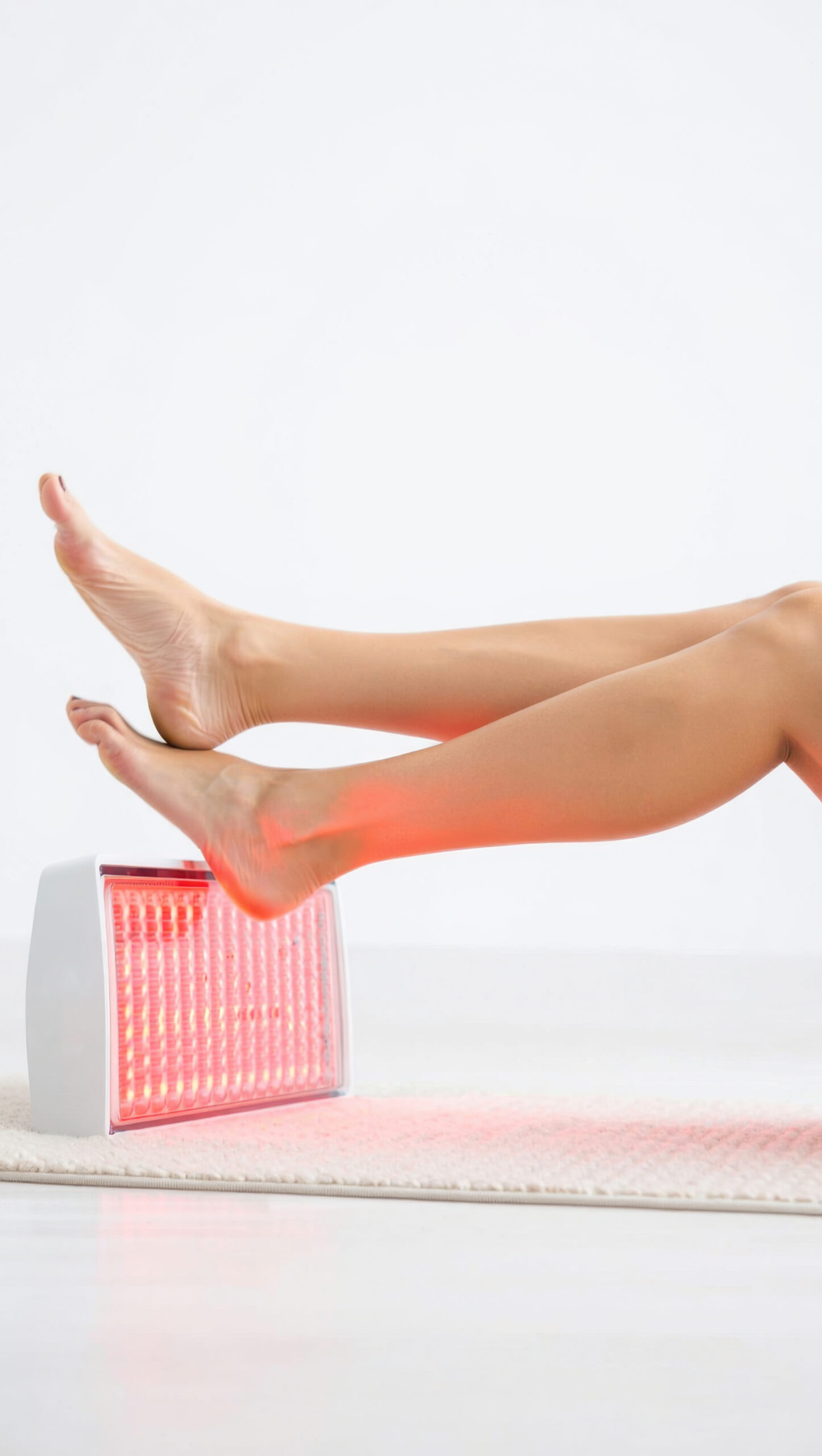
Where can it help your feet?
While it’s certainly not a miracle cure, quality red light therapy can be a valuable addition to many treatment plans.
Musculoskeletal Tendinopathies/Injuries
Photobiomodulation may help reduce inflammation, improve local circulation and support tissue healing—particularly when combined with appropriate footwear, stretching, strengthening exercises
and custom orthoses where required.
General Muscle & Joint Recovery
Whether you’re a runner, weekend walker or spend long hours standing for work, sore feet and tired legs may benefit from regular light therapy.
Many athletes now incorporate red light sessions into their recovery routine to reduce muscle soreness and support tissue repair following exercise.
Nail Trauma & Slow Nail Growth
Damaged toenails—whether from sport, hiking boots, skiing or accidental trauma—often take 12-18 months to fully regrow.
Improved circulation and healthier cellular activity may assist the nail matrix in producing stronger, healthier nail growth over time.
It’s not an overnight fix, but it may support the natural regeneration process.
Fungal Nails
This is where expectations need to be realistic. While red light therapy may improve circulation and support healthier surrounding tissues, it is not considered a primary treatment for fungal nail infections.
Medical laser therapy remains significantly more effective because it delivers specific energy designed to target fungal organisms.
At Luxe Feet, we often combine medical laser, topical treatments, regular podiatry care and home maintenance to achieve the best outcomes.
Healthy feet deserve smart technology—not just clever marketing.