
The truth about pointe work, foot health, and why not every dancer ends up with damaged feet.
For decades, ballet has been synonymous with graceful movement, extraordinary athleticism… and notoriously damaged feet.
We’ve all seen the photographs: bruised toenails, bunions, calluses, and toes that appear permanently altered by years of dancing en pointe. It’s enough to make anyone wonder—is ballet really that bad for your feet?
As podiatrists, we often hear parents ask whether they should allow their child to pursue pointe work, while adult dancers wonder if foot pain is simply “part of the sport.”
The truth is far more nuanced.
Ballet Dancers Are Elite Athletes
Professional ballet dancers place enormous physical demands on their bodies. During a performance, a dancer may generate forces up to 10–12 times their body weight through the forefoot during jumps, landings and pointe work.
Unlike many sports, ballet requires exceptional:
- Strength
- Balance
- Flexibility
- Endurance
- Precision
- Body awareness
The feet are expected to be both incredibly flexible and remarkably strong—a difficult combination to achieve.

What Exactly Is Pointe Work?
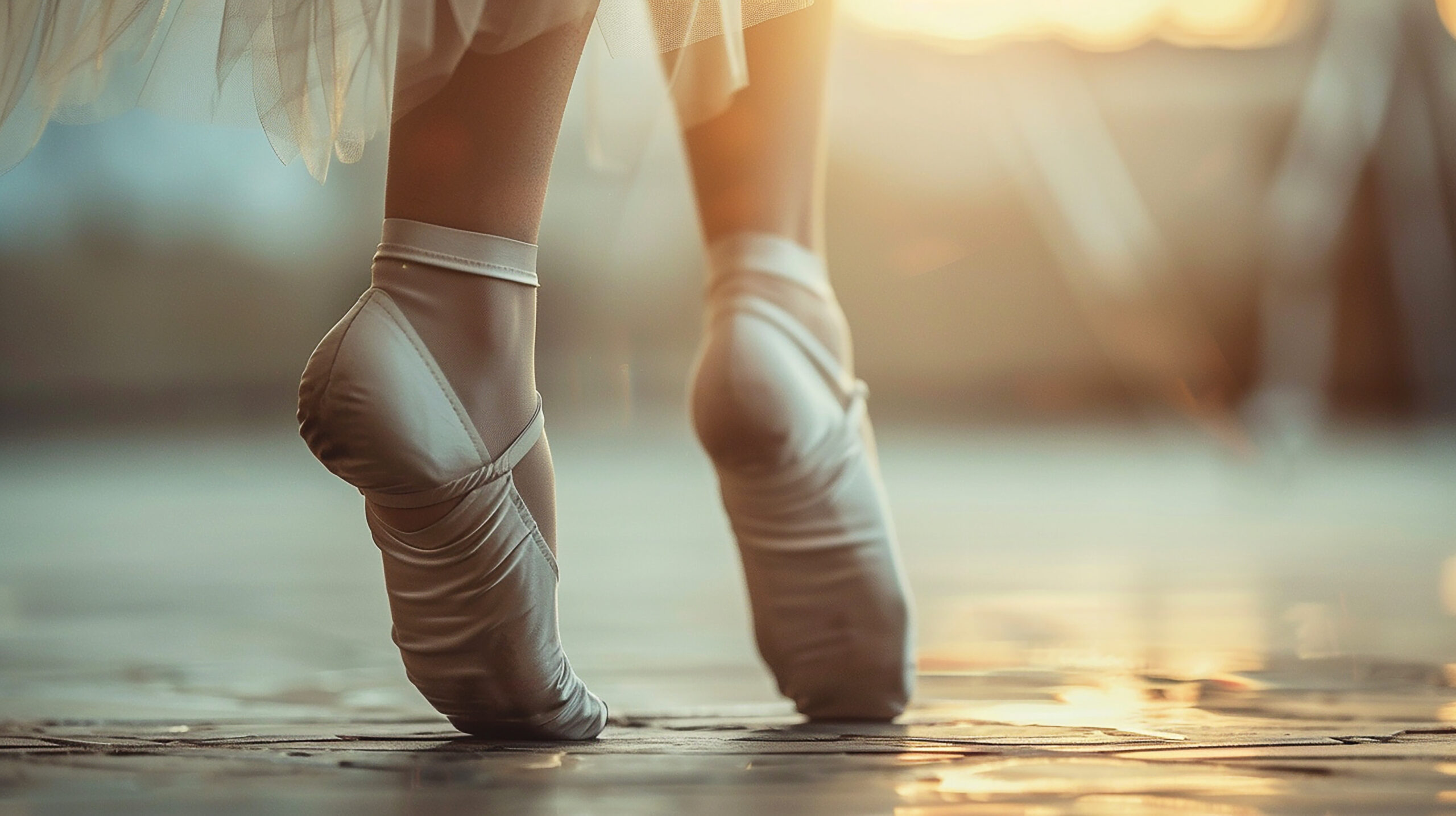
Pointe work involves dancing on the very tips of the toes while wearing specially designed pointe shoes.
Contrary to popular belief, the shoe doesn’t “hold the dancer up.”
Instead, it provides a rigid platform that allows the foot and ankle muscles to support the body’s weight. The strength comes from the dancer—not the shoe.
Reaching this stage typically takes many years of structured training, with most dancers beginning pointe only once they have developed sufficient strength, technique and skeletal maturity.
Does Pointe Work Damage Feet?
Not necessarily.
Research suggests that well-trained dancers who begin pointe at the appropriate age and under expert supervision are less likely to suffer serious long-term foot damage than many people assume.
Problems tend to arise when dancers:
- Begin pointe too early
- Have poor technique
- Wear poorly fitted shoes
- Dance through pain
- Increase training loads too quickly
Like any elite sport, injuries are usually the result of excessive load exceeding the body’s capacity.
Common Foot Problems We See
Even with excellent technique, ballet places unique stresses on the foot.
Common conditions include:
- Bunions (Hallux Valgus)
- Thickened nails and bruised toenails
- Corns and calluses
- Morton’s neuroma
- Forefoot bursitis
- Stress fractures
- Achilles tendinopathy
- Plantar plate injuries
- Ankle sprains
- Flexor hallucis longus (FHL) tendinitis—sometimes called “dancers’ tendonitis.”
Fortunately, many of these conditions can be managed conservatively when recognised early.
What Makes a Good Ballet Foot?
Interestingly, the “perfect ballet foot” isn’t always the healthiest.
Many dancers naturally possess:
- High arches
- Excellent ankle plantarflexion
- Long, flexible toes
- Strong intrinsic foot muscles
- Good turnout from the hips (rather than forcing it through the feet)
However, excessive flexibility without adequate strength can actually increase injury risk.
That’s why modern ballet training now places much greater emphasis on strength and conditioning.
Strength Training Has Changed Everything
Gone are the days when dancers simply danced more to improve.
Today’s elite ballet companies routinely include:
- Foot strengthening
- Calf strengthening
- Single-leg balance work
- Pilates
- Resistance training
- Core stability
- Cross-training
- Recovery sessions
Research consistently shows that stronger foot muscles improve balance, reduce fatigue and may help decrease injury rates.
The Role of a Podiatrist
Many dancers only seek help once the pain becomes unbearable—but prevention is far more effective.
A podiatrist experienced in dance medicine can assess:
- Foot type
- Joint mobility
- Muscle strength
- Biomechanics
- Training loads
- Shoe fit
- Injury risk factors
Treatment may include:
- Foot-strengthening programs
- Taping techniques
- Padding and off-loading
- Orthotic modifications (when appropriate)
- Laser therapy for tendon injuries
- Shockwave or rehabilitation exercises
- Nail care and skin management
- Referral for imaging or specialist care when required
The aim isn’t to stop someone dancing—it’s to keep them dancing.
Can Dancers Wear Orthotics?
It’s one of the most common questions we receive.
Orthotics are rarely worn inside pointe shoes, simply because there isn’t enough space.
However, some dancers benefit from custom orthoses in their everyday footwear to improve alignment, reduce overuse injuries and support recovery between training sessions.
Each case needs individual assessment.
So… Are Ballet Feet Really “Ruined”?
The dramatic photos on social media tell only part of the story.
Yes, ballet is demanding.
Yes, dancers often develop calluses, bruised nails and the occasional injury.
But with proper coaching, gradual progression, strength training, well-fitted pointe shoes and early treatment when problems arise, many dancers enjoy long, successful careers without significant long-term disability.
Like marathon runners, gymnasts and footballers, ballet dancers ask extraordinary things of their bodies.
Their feet aren’t necessarily “bad.”
They’re simply the result of years of remarkable athletic performance.
The Luxe Feet Perspective
At Luxe Feet, we have enormous respect for dancers and the incredible demands they place on their feet. Whether you’re a young student preparing for your first pair of pointe shoes, a professional performer, or an adult returning to ballet, early assessment can help prevent small problems from becoming career-limiting injuries.
Healthy ballet feet aren’t about avoiding hard work—they’re about combining expert training, smart recovery and professional foot care to keep you dancing comfortably for years to come.
“The goal isn’t perfect feet—it’s healthy feet that keep you dancing.”